XLPE vs PVC Low Voltage Power Cable
Choosing a Low Voltage Power Cable can become a costly guessing game when a project has long operating hours, tight cable routes, or limited space for larger conductors. For an industrial installation, the decision often comes down to XLPE insulated low voltage cable versus PVC insulated power cable, but price is only one part of the answer. Conductor ampacity, voltage drop, and a flame-retardant sheath all matter, as do the insulation’s thermal behavior: XLPE is a thermoset insulation, while PVC is a thermoplastic insulation. The right choice depends on the load, ambient temperature, installation method, and applicable code—not on a blanket claim that one material is always better.
Both types are widely used in low-voltage distribution, commonly at 0.6/1 kV when manufactured to the relevant cable standard. In broad terms, PVC is often selected for cost-conscious building and general-purpose wiring, while XLPE is considered where higher continuous conductor temperatures or demanding load conditions affect cable sizing. Those are useful starting points, not final design rules: the cable’s full construction, including conductor material, insulation thickness, bedding, armour, and outer sheath, must match the job.
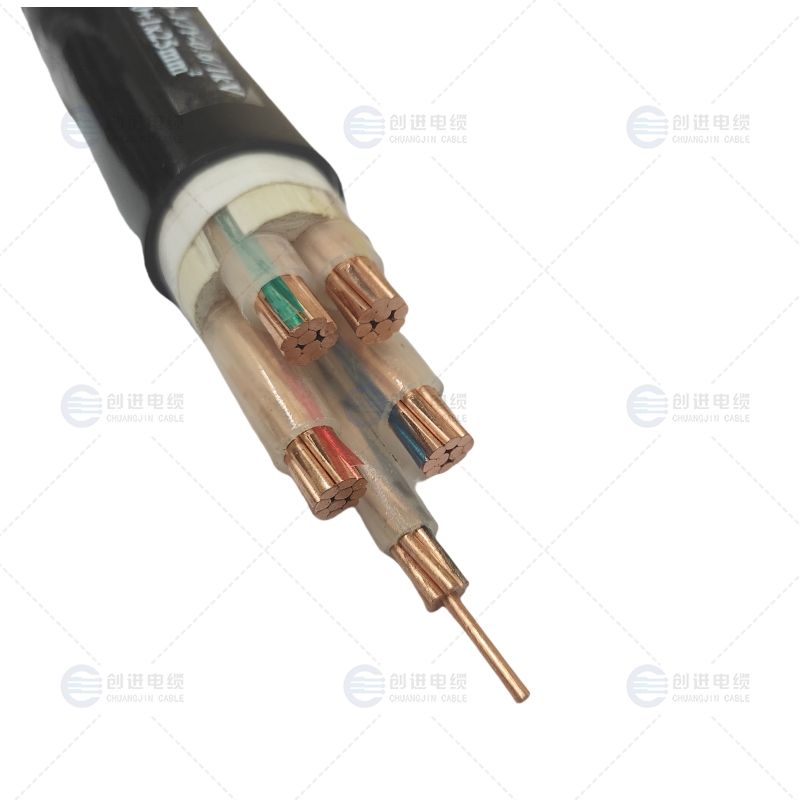
For a quick technical comparison, typical values in commonly applied cable designs are shown below. Confirm the exact rating on the manufacturer’s datasheet and against the governing standard for the project; national rules, cable construction, and operating conditions can change the limits.
| Comparison point | XLPE cable | PVC cable | What it means in practice |
|---|---|---|---|
| Typical maximum continuous conductor temperature | 90°C | 70°C | XLPE may permit a higher calculated current rating, but only when the installation conditions and protection design allow it. |
| Typical short-circuit conductor temperature, up to 5 seconds | 250°C | 160°C | These commonly cited limits are design inputs, not permission to ignore fault-current calculations or protective-device coordination. |
| Insulation behavior | Cross-linked thermoset material | Thermoplastic compound | Cross-linking helps XLPE retain its shape at higher temperatures; PVC softens as temperature rises and must remain within its rated limits. |
| Relative purchase cost | Often higher | Often lower | Actual quotations depend on copper or aluminium, conductor size, armour, sheath compound, order quantity, and market conditions. |
| Common use cases | Industrial feeders, higher-load circuits, and installations where thermal capacity is important | General building wiring, lighting, and cost-sensitive distribution where the rating is adequate | The appropriate cable still depends on local electrical rules, route, environment, and equipment requirements. |
| Fire and environmental performance | Depends on the specified insulation and sheath construction | Depends on the specified PVC compound and sheath construction | Do not infer flame, smoke, UV, oil, or chemical performance from the insulation label alone; check the test classification. |
The temperature figures explain one key difference, but they do not mean XLPE automatically carries a fixed percentage more current. Ampacity is calculated using conductor size and material, ambient temperature, grouping, installation method, thermal resistivity, and the temperature limits of every cable layer. A cable in a hot tray beside several loaded circuits may have a lower allowable current than the same cable installed alone in a cooler route. Use the applicable ampacity tables or engineering calculation rather than applying a generic uplift.
Voltage drop also needs a separate check. For the same conductor material, cross-section, length, and load, XLPE and PVC cables have broadly similar electrical resistance at a given conductor temperature. The actual voltage drop depends on load current, power factor, cable impedance, and operating temperature. If voltage drop is excessive, a larger conductor or a shorter route may be required regardless of insulation type. For projects designed to IEC practices, IEC 60502-1 is commonly referenced for power cables with extruded insulation in this voltage range, while conductor requirements are addressed by IEC 60228; confirm the editions and local adoption specified in the contract.
Consider how that translates to a real decision. A worked example—not a claimed customer testimonial—might be a 400 V, three-phase motor feeder running for long shifts through a warm plant room. The engineer would first establish motor full-load current, starting method, cable length, installation arrangement, ambient temperature, grouping, fault level, and permitted voltage drop. If the PVC cable needs a larger conductor to meet the thermal calculation, compare the installed cost of that larger PVC cable with the correctly sized XLPE option. Then check termination compatibility, bending radius, mechanical protection, and the protective device. Without those project inputs, naming a cable size or promising a percentage saving would be unreliable.
For a short lighting circuit in a normal indoor environment, by contrast, a properly rated PVC cable may be the practical choice. If the circuit’s calculated current, voltage drop, fault withstand, and environmental requirements are met, paying extra for a higher insulation temperature rating may not provide a meaningful project benefit. In a factory expansion, a generator connection, or a feeder with limited containment space, XLPE may be worth evaluating because its thermal rating can affect conductor sizing. It still cannot replace correct derating, short-circuit checks, or suitable fire-performance requirements.
Cost is best compared using like-for-like quotations rather than a universal price premium. Copper price and conductor cross-section can dominate the bill; armour, cores, sheath specification, certification, testing, delivery, and minimum order quantities also move the total. Ask suppliers to quote the same voltage rating, conductor material and class, number of cores, cross-section, armour, sheath, and applicable standard. Then compare the installed system cost, including glands, lugs, supports, labour, and any change in cable size. XLPE may cost more per metre in a particular quotation, but a smaller calculated cross-section could alter the installed total; PVC may be the lower-cost solution when the required size and route are straightforward. Neither outcome should be assumed before design and quotation.
People evaluating cable suppliers tend to need evidence more than slogans. A fair word-of-mouth assessment should distinguish verified project feedback from general product claims. Ask for references for comparable voltage, cable construction, and installation conditions; request a current datasheet and routine test documentation; and confirm traceability, packaging, lead time, and after-sales handling. Chuangjin Cable can be included in that comparison alongside other qualified manufacturers: assess its quotation and documents against the same specification, rather than treating the brand name alone as proof of suitability. No unverified customer testimonial or performance result should substitute for a project-specific technical review.
For procurement teams, a simple side-by-side checklist helps prevent mismatched offers. Confirm whether the conductor is copper or aluminium and whether it meets the required conductor class; check rated voltage, core count, insulation and sheath materials, armour, operating-temperature limits, flame test classification, and dimensional tolerances. Also establish whether the supplied cable is intended for fixed installation, direct burial, outdoor exposure, or another specific condition. Flame propagation performance is determined by the tested cable construction and the required test, such as the applicable part of IEC 60332—not by the word “XLPE” or “PVC” on its own.
There are practical handling differences, too. PVC cable is often familiar to installers and may be easier to handle in some constructions, while XLPE designs can feel stiffer depending on conductor size, armour, and sheath. These are not universal material guarantees: bending radius and installation temperature come from the manufacturer’s instructions. Plan pulling tension, drum access, route bends, and termination space before ordering. A cable that meets its electrical rating can still cause installation problems if the route and accessories are poorly matched.
In an unbiased ranking by typical use rather than overall quality, PVC comes first for a standard, cost-sensitive indoor circuit whose calculations show adequate capacity; XLPE comes first where higher continuous conductor temperature is a relevant design advantage; and either construction may be appropriate for a general feeder if its full specification meets the site and code requirements. This is a decision framework, not a universal product ranking. For severe heat, oils, UV exposure, corrosive conditions, or special fire and smoke requirements, choose the required sheath and certification explicitly and do not rely on insulation type as a proxy.
Before placing an order, send suppliers the same design brief: voltage, load, conductor material, route length, installation method, ambient conditions, grouping, fault level, environmental exposure, and required standards. Ask them to identify the exact cable construction and provide its datasheet, test records, and quotation assumptions. Have a qualified electrical designer verify ampacity, voltage drop, short-circuit withstand, and protective-device coordination under the applicable local rules. That process makes competing offers comparable and reduces the risk of buying an unsuitable cable simply because its unit price looks attractive.
In short, choose PVC when its calculated rating and environmental performance satisfy the application and purchase cost is a priority; choose XLPE when its higher typical conductor-temperature limit is useful to the design and the complete cable specification supports the site conditions. Neither is automatically best for every Low Voltage Power Cable project. Comparing an XLPE insulated low voltage cable with a PVC insulated power cable should come down to conductor ampacity, voltage drop, and the verified short-circuit temperature limits—not marketing adjectives. Share your route, load, and installation details with Chuangjin Cable or another qualified supplier, then compare documented, like-for-like offers before making the final decision.

评论
发表评论