How to Choose a Reliable Electrical Cable Manufacturer
Choosing an Electrical Cable Manufacturer is not just a price comparison: the wrong cable can cause failed inspections, installation delays, or costly replacement. To find a reliable electrical cable manufacturer, compare the product specification, request a cable manufacturer for custom projects when needed, and verify quality assurance and production traceability. Check technical details such as conductor resistance, insulation resistance, and type testing—not just a brochure or sales promise. These checks help buyers assess a power cable supplier for a building, factory, renewable-energy project, or equipment line.
In brief: Define the application first, match the cable to applicable standards and site conditions, verify that test documents refer to the exact product, and agree on inspection and delivery requirements in writing.
A cable may look correct on a reel while still failing to meet the specified conductor size, insulation material, voltage rating, or fire-performance requirement. These differences can affect electrical performance, installation, safety approval, and service life. Choosing a capable manufacturer means confirming that the company can make the specified construction consistently and provide traceable evidence—not merely that it sells cable.
For example, a contractor ordering low-voltage power cable for a commercial building needs more than a quoted price per metre. The cable must suit the design current, installation method, ambient conditions, and local code. A factory supplying a similar-looking cable without the required conductor class or test documentation may create a problem at inspection or commissioning.
Why choosing the right Electrical Cable Manufacturer matters
Preparation before contacting an Electrical Cable Manufacturer
Application: State whether the cable is for fixed wiring, a machine, a solar installation, a control circuit, or another use.
Electrical requirements: Record nominal voltage, conductor material, cross-sectional area, number of cores, and any required conductor class.
Installation conditions: Note indoor or outdoor use, direct burial, conduit, tray, exposure to oil or chemicals, temperature range, UV exposure, moisture, and expected movement.
Safety and compliance: Identify the code, certification, and fire-performance requirements for the destination market. Confirm the applicable edition with the project engineer or authority having jurisdiction.
Commercial details: Estimate order quantity, required delivery date, shipping destination, packaging, drum length, and whether partial shipments are acceptable.
Project documents: Prepare drawings, a bill of materials, a technical specification, or a reference cable sample if available.
Information to collect for an electrical cable supplier
Prepare a comparison sheet, a document checklist, and a way to record open questions. Request the manufacturer’s technical datasheet, manufacturing address, relevant certificates, sample inspection records, and a sample or pre-production sample where practical. If the project is safety-critical, arrange a qualified third-party inspection or testing plan rather than relying solely on a sales sample.
Useful comparison fields: exact construction, applicable standard and edition, certificate scope, test report date, batch traceability, minimum order quantity, lead time, payment terms, warranty conditions, and corrective-action process.
Tools and documents for manufacturer checks
Step-by-step guide to selecting a reliable Electrical Cable Manufacturer
Describe the finished cable rather than asking only for a generic product name. Include conductor material and size, conductor class, core count, insulation and sheath materials, rated voltage, colour, shielding or armour, operating environment, packaging, and required tests. If a design authority has approved a particular construction, do not accept a substitution without written engineering approval.
For example, specify whether copper or aluminium is required and whether the cable must be flexible or intended for fixed installation. Terms such as cable size can be ambiguous across markets, so give the unit and standard reference, such as cross-sectional area in mm² and the required conductor class under the project specification.
Step 1: Write a precise cable specification
Ask which standard governs the cable and which edition the quotation uses. IEC 60228 covers conductor classes and conductor resistance requirements. IEC 60502-1 applies to certain extruded-insulation power cables with rated voltages from 1 kV up to 3 kV, including 0.6/1 kV and 1.8/3 kV ratings. Fire-related requirements may involve standards such as IEC 60332 for flame propagation, IEC 60754 for gases evolved during combustion, or IEC 61034 for smoke density. The appropriate test depends on the project and jurisdiction; listing a standard does not automatically mean every test or certification applies.
Ask the supplier to identify the exact product family and clauses covered by each document. A certificate for one cable construction, factory, or voltage rating may not cover a different product. Have the project engineer or compliance specialist confirm that the proposed standard meets local regulations.
Step 2: Match the product to the correct standards
Confirm the legal company name, manufacturing site, and whether the quoted party is the actual factory or a trading company. A trading company can still be suitable, but you should know who controls production, testing, and corrective actions. Check that certificates show the relevant manufacturer, site, product type, and validity or scope. If a certification database is available, verify the entry there rather than relying only on a PDF.
Request a recent test report for the same construction and ask how production batches are identified. A report should state what was tested, the methods used, results, date, and responsible laboratory. Treat a generic certificate or an undated marketing sheet as an initial lead, not proof that the exact cable in your order complies.
Step 3: Verify the manufacturer and the scope of its documents
Ask how incoming conductor material, insulation compounds, and finished cable are inspected. A capable quality system should explain how nonconforming material is controlled, how test equipment is calibrated, and how inspection records connect to a production batch. Request examples of routine test records and a sample certificate of analysis, with commercially sensitive information removed if necessary.
For applicable designs, checks may include conductor resistance, insulation resistance, voltage withstand, dimensional measurements, and visual inspection. Type tests, sample tests, and routine tests serve different purposes; ask which are required by the specification and which will be performed on your order. Agree in writing on acceptance criteria and who pays for independent testing if a result is disputed.
Step 4: Assess quality controls and traceability
Where practical, inspect a sample before placing a production order. Compare markings, core identification, outer diameter, conductor construction, sheath condition, and packaging with the approved datasheet. A sample helps catch specification misunderstandings but does not prove that every production metre will match it, so connect sample approval to the purchase order and production inspection plan.
For a project with strict tolerances, ask the manufacturer to provide a sample drawing or construction cross-section. Record any approved deviation, including its technical impact, before production begins.
Step 5: Review a sample and confirm the construction
Compare like with like. Confirm that every quote uses the same conductor metal, cross-sectional area, insulation, voltage rating, standard, test scope, length per drum, packaging, Incoterm, and delivery destination. A low unit price may exclude testing, documentation, export packing, or freight. Include expected inspection costs, taxes, duties, installation compatibility, and the cost of potential rework when assessing total cost.
Check lead time carefully: ask whether it means time to production, dispatch, or delivery to site. Request a production schedule and written notice requirements for delays. Do not treat an unqualified estimate as a guaranteed delivery date.
Step 6: Compare quotations on total delivered cost
The purchase order should identify the approved datasheet and standard, permitted tolerances, required markings, test documents, inspection rights, packaging, delivery schedule, and process for handling nonconforming product. Include warranty terms and a named contact for technical issues. For staged projects, clarify whether changes to the approved construction require written consent.
Ask how the manufacturer investigates a complaint, preserves batch records, and arranges replacement or corrective action. These details matter most when a defect is discovered after installation, when identifying the affected production lot can limit disruption.
Step 7: Put acceptance and after-sales terms in the order
Note: The following is an illustrative procurement scenario, not a verified customer testimonial or a claim about a specific company. A facilities buyer needs 0.6/1 kV power cable for a refurbishment and receives two quotations. One offer is cheaper but gives only a catalogue sheet; the other includes a product-specific datasheet, a test-document list, and a proposed production schedule.
The buyer creates a side-by-side checklist and finds that the offers differ in conductor class, drum length, and included tests. Rather than selecting the lower headline price, the buyer asks both suppliers to quote the same written construction and clarify whether the reports cover the proposed factory and product. The buyer then has the engineer approve the technical match, records the accepted datasheet in the order, and makes delivery conditional on the agreed documentation and inspection plan.
The practical outcome in this example is not a promised percentage saving. It is a controlled comparison: fewer hidden differences in the bids, a clear approval record, and a defined route for checking the delivered cable. Apply the same process to actual offers and retain the final documents with the project records.
Illustrative buyer case: screening an Electrical Cable Manufacturer
Use a written checklist to compare cable construction, evidence, inspection, and delivery terms.
Common Electrical Cable Manufacturer selection errors and solutions
Choosing by price per metre alone
Why it fails: Quotes may use different materials, constructions, drum lengths, test scopes, or delivery terms.
Solution: Send every bidder the same specification and compare total delivered cost, exclusions, and acceptance requirements.
Assuming a certificate covers every product
Why it fails: Certification may be limited to a named factory, product family, voltage rating, or standard edition.
Solution: Check the document scope and verify that the quoted cable and production site are included.
Confusing a routine test with a type test
Why it fails: The tests have different purposes and are not interchangeable evidence.
Solution: Ask for a test schedule that names each test, its frequency, method, acceptance criteria, and the records supplied with your order.
Accepting vague delivery promises
Why it fails: Lead time may refer to production completion rather than arrival at the project site.
Solution: Define the delivery milestone, shipping terms, dispatch documents, and process for communicating schedule changes.
Approving a sample without controlling production
Why it fails: A sample does not automatically establish the construction of the production batch.
Solution: Reference the approved sample and datasheet in the order, require batch identification, and define inspection or testing for production.
Using a standard without checking local requirements
Why it fails: A technically valid cable may still not satisfy local electrical codes, fire rules, or project approvals.
Solution: Have the responsible engineer or authority confirm the required standards and editions before ordering.
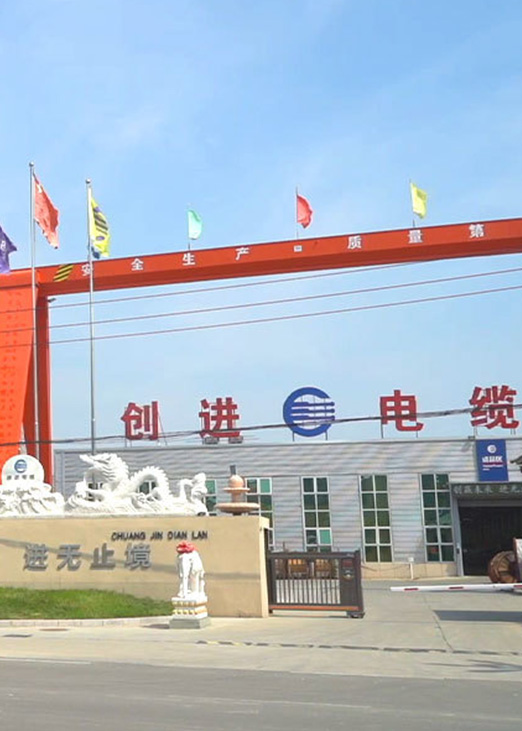
Questions to ask Chuangjin Cable or another Electrical Cable Manufacturer
When contacting Chuangjin Cable or any shortlisted supplier, use the same questions so the answers are comparable. Ask: Which factory will make this order? Which standard and edition apply? Can you provide a datasheet and reports for this exact construction? What routine tests will be recorded against the production batch? How is each drum labelled and traceable? What are the production and delivery milestones? What happens if inspection identifies a nonconformity?
Evaluate the quality and specificity of the answers rather than assuming a brand name proves suitability. Ask for supporting documents, confirm the scope, and have the technical approver sign off before production.

评论
发表评论